

The glare hits before you even see the car. For a split second, your vision is obliterated, your heart races, and you are driving at highway speeds almost blind.
This sudden, disorienting burst of light is not a rare phenomenon; it has become a near-universal complaint among drivers worldwide.
Modern headlights, especially those using LED and high-intensity discharge (HID) technology, are no longer just bright—they can be dangerously blinding under certain conditions. Reports from across the globe reveal a pattern: drivers describe the momentary blindness as startling, sometimes leaving them swerving slightly, braking abruptly, or looking away from the road entirely.
LED headlights were introduced as part of a wave of automotive innovation, offering whiter light closer to natural daylight, improved energy efficiency, and a longer lifespan than traditional halogen bulbs.
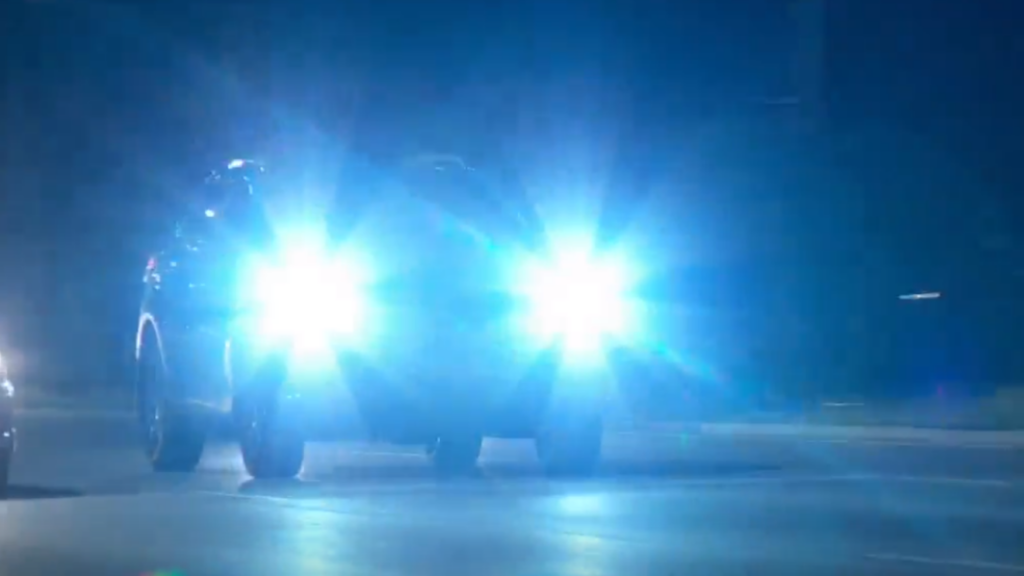
Initially celebrated for enhancing visibility and reducing maintenance costs, these lights have now sparked concerns about road safety. Unlike halogen headlights, which emit a warmer, more diffuse light, LEDs produce a concentrated, intense beam.
While this improves forward visibility for the driver of the vehicle equipped with them, it can produce severe glare for oncoming traffic, particularly when the headlights are mounted higher—as they often are on SUVs, trucks, and crossover vehicles—or when alignment is even slightly off.
A misalignment of just a few degrees can dramatically increase glare, temporarily blinding drivers for several crucial seconds.
The problem is compounded by the growing size and height of vehicles on modern roads. Taller vehicles mean their headlights sit above the natural line of sight for many drivers, directing light straight into the eyes of smaller cars.
This effect is magnified on winding or uneven roads, where slight vertical changes in the terrain can redirect the beam unpredictably. Even when drivers momentarily adjust their eyes or glance down, the lingering glare can impair depth perception and make it difficult to judge speed or distance, increasing the risk of accidents.
Data from traffic safety organizations indicates that glare-related incidents contribute to a measurable portion of nighttime collisions, though exact statistics are difficult to determine because the cause—temporary blindness—is often not recorded in official reports.
Current headlight regulations, many of which were established decades ago, were designed primarily for halogen lighting. These standards set limits on beam intensity and height but often fail to account for the modern mix of vehicle sizes, headlight types, and road conditions.
Safety advocates argue that these regulations are outdated and inadequate, leaving drivers to cope with glare largely on their own.
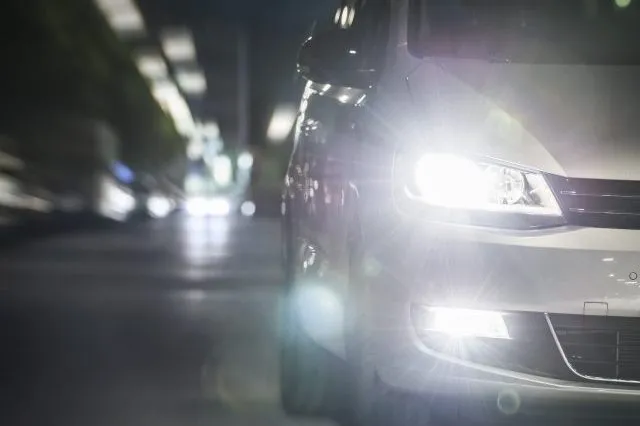
While some newer vehicles incorporate adaptive lighting systems capable of automatically adjusting beam intensity and angle based on oncoming traffic and road curves, these technologies are not yet widespread. As a result, millions of drivers remain exposed to intense glare from improperly aligned or overly bright headlights.
The effects of glare go beyond mere discomfort. Even a second or two of impaired vision can be catastrophic at highway speeds. A vehicle traveling at 65 miles per hour covers nearly 95 feet per second.
A momentary blindness lasting three to five seconds can mean the car has traveled between 285 and 475 feet—well over the length of a football field—without the driver being able to accurately perceive obstacles, curves, or traffic.
Studies in human visual perception confirm that intense light exposure temporarily reduces the eye’s ability to detect contrasts and colors, prolonging recovery time and making sudden hazards harder to react to. For elderly drivers or those with preexisting vision conditions such as cataracts, the impairment can be even more severe, further increasing the risk of collisions.
Experts point out that the issue is not about over-sensitive drivers but rather how the technology is implemented. LEDs themselves are not inherently unsafe; the dangers arise from the combination of high-intensity beams, vehicle design, and regulatory gaps.
Safety solutions exist, but enforcement is inconsistent. Recommendations include stricter limits on maximum glare, mandatory headlight alignment inspections during vehicle maintenance or annual safety checks, and wider adoption of adaptive lighting systems capable of dynamically adjusting to traffic and road conditions.
These measures could significantly reduce glare-related risks, but they require coordination between manufacturers, regulatory bodies, and drivers themselves.
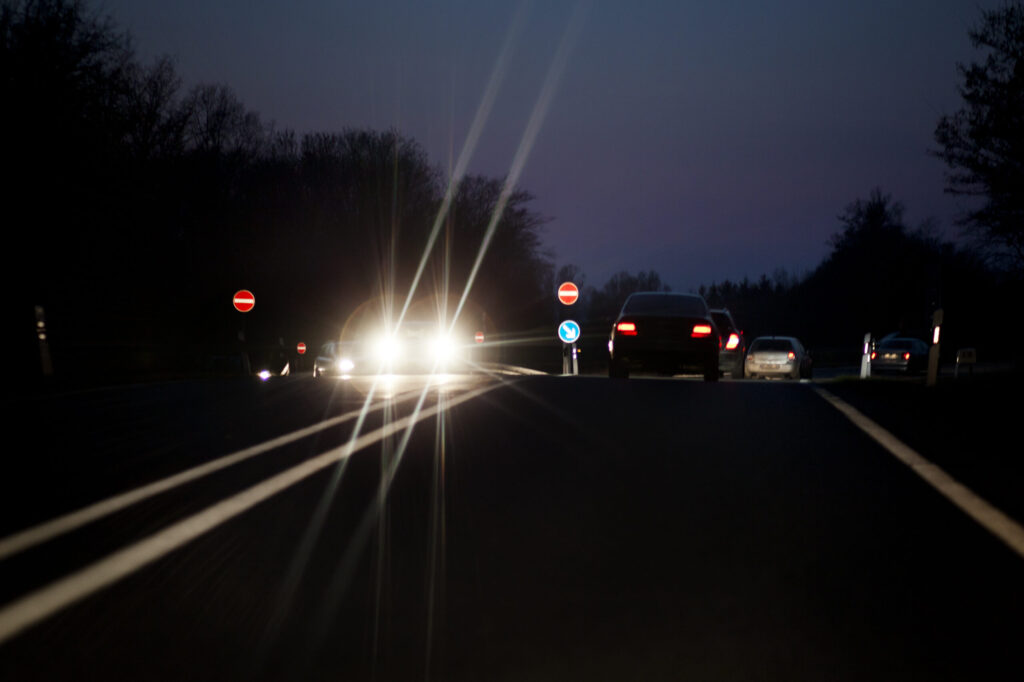
Beyond the technical aspects, glare contributes to psychological and behavioral effects on the road. Drivers experiencing momentary blindness may instinctively look away from the light source, swerve slightly, or brake abruptly.
Even when accidents do not occur, these reactions can disrupt traffic flow and increase stress levels for all drivers. Over time, repeated exposure to intense headlights can lead to anxiety and cautious driving behaviors at night, potentially discouraging travel after dark or increasing congestion in safer daylight hours.
In urban areas, the problem can be magnified by dense traffic, reflective surfaces, and roadside lighting. LED lights can reflect off wet pavement, signs, or windows, creating secondary glare that further impairs vision.
In rural areas, glare can be even more dangerous due to higher vehicle speeds and less ambient lighting. Emergency response teams have noted that glare-related disorientation contributes to near-misses, delayed reaction times, and difficulty navigating at high speeds, underscoring the broad safety implications of the phenomenon.
While glare from modern headlights may appear to be a purely technical issue, it has significant legal and regulatory implications. Vehicle safety standards in most countries were originally developed around halogen bulbs, which emit a warmer and more diffuse light.
These older regulations define maximum beam intensity, alignment angles, and permissible glare limits. However, the advent of high-intensity LEDs and HIDs has outpaced the regulatory frameworks, creating gaps in enforcement and safety oversight.
Agencies such as the U.S. National Highway Traffic Safety Administration (NHTSA) and the European Union’s Economic Commission for Europe (ECE) are in the process of updating standards, but the pace of regulatory adaptation often lags behind technological adoption, leaving millions of drivers exposed to inconsistent levels of glare.
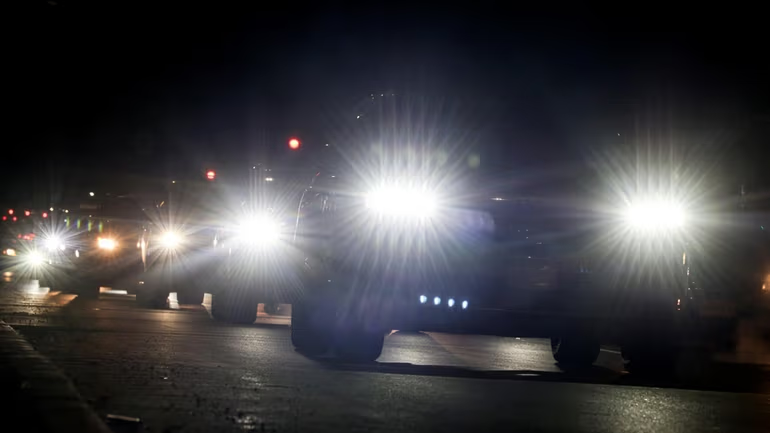
In addition to regulations, headlight design and vehicle manufacturing play a crucial role in mitigating glare. Some manufacturers have adopted adaptive front-lighting systems (AFS), which can automatically adjust beam direction and intensity based on road curvature, vehicle speed, and the presence of oncoming traffic.
These systems, while effective, remain costly and are more commonly installed on premium models rather than standard vehicles. Without widespread adoption, many drivers are still confronted with high-mounted, non-adjusting LED or HID headlights that can blind oncoming traffic.
