

Experts recommend that even simple measures, such as routine alignment checks during maintenance, can significantly reduce the risk of glare incidents.
Driver education is another critical factor in addressing this hazard. Studies show that many drivers are unaware of how to properly adjust their headlights, the optimal height and angle for different vehicle types, and the potential dangers of aftermarket modifications.
The popularity of aftermarket LED and HID kits, often sold as performance upgrades, has compounded the problem. These kits can increase intensity beyond regulatory limits or misalign beams, leading to higher risks for other road users.
Safety advocates suggest that dealerships, manufacturers, and driving schools should provide clearer guidance on headlight adjustments and the dangers of improper installation.
The health and perceptual effects of glare are also significant. Intense light exposure temporarily reduces the eye’s contrast sensitivity and can induce a condition called “flash blindness,” during which vision is severely impaired for seconds to minutes, depending on individual eye health and ambient conditions.
Drivers with preexisting vision issues, including cataracts, macular degeneration, or even minor refractive errors, are particularly vulnerable. For these drivers, encountering high-intensity headlights at night can be overwhelming, leading to delayed reactions and increasing the probability of accidents.
Pediatric and elderly drivers are similarly at higher risk, highlighting the public health dimensions of what might otherwise appear to be a mere convenience or cosmetic feature.
Urban planning and roadway design intersect with the glare issue in important ways. In cities, reflective surfaces such as wet asphalt, glass storefronts, and metal signage can amplify the effects of high-intensity headlights.
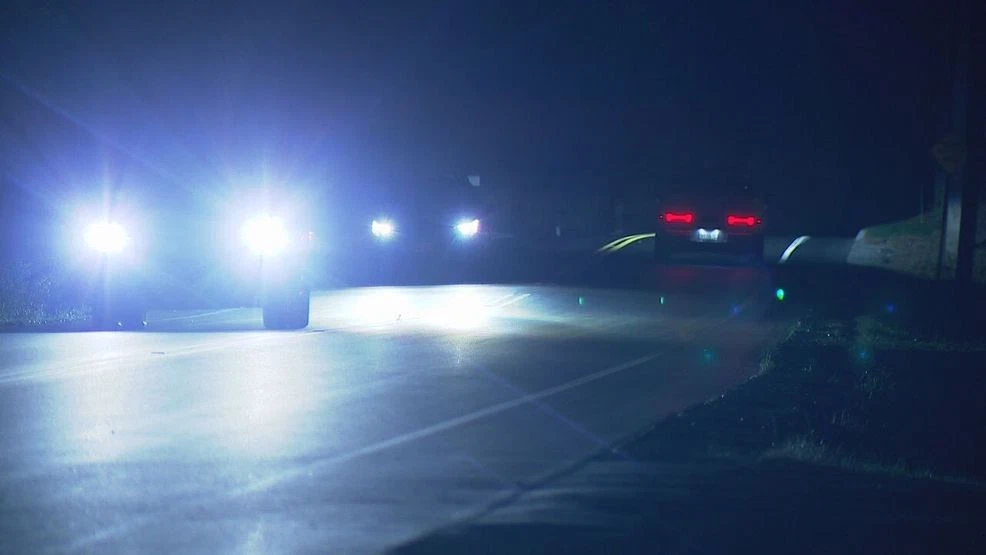
Rural roads, by contrast, pose risks because of higher average speeds and limited ambient lighting. In both scenarios, even a few seconds of temporary blindness can lead to loss of vehicle control, delayed reaction to hazards, or unintended lane deviations.
Public safety organizations emphasize the need for better integration between vehicle lighting standards and road design considerations, such as sign reflectivity, roadside clearance, and ambient lighting levels.
The economic consequences of glare-related incidents are substantial as well. Nighttime collisions result in higher rates of property damage, medical costs, and insurance claims.
Furthermore, the anxiety associated with frequent exposure to intense headlights can influence driver behavior, reducing night-time travel, increasing congestion in daylight hours, and indirectly affecting local economies.
While precise quantification of these costs is difficult, safety advocates and traffic economists agree that mitigating glare is not only a public health issue but also an economic one.
Technological solutions are rapidly evolving. In addition to adaptive front-lighting systems, innovations like matrix LED headlights allow precise control over individual diodes, enabling the vehicle to selectively dim certain areas of the beam to reduce glare while maintaining maximum forward visibility.
Automatic high-beam assist, already included in many new models, detects oncoming traffic and ambient light to adjust brightness dynamically. While these solutions have demonstrated efficacy in reducing glare-related incidents, their adoption remains limited by cost, regulatory inconsistency, and consumer awareness.
Advocacy groups call for wider implementation, suggesting incentives or standards that make these safer lighting technologies mandatory rather than optional.
Legislators and safety authorities are increasingly paying attention to the issue. In the United States, discussions within NHTSA and state-level transportation departments focus on updating headlight standards, revising testing protocols to reflect real-world driving conditions, and imposing stricter penalties for non-compliant aftermarket installations.
In the European Union, ECE regulations already set certain limits on glare and beam intensity, but critics argue that testing procedures—often conducted under ideal laboratory conditions—do not accurately simulate dynamic road environments with varying elevation, curves, and mixed traffic conditions.
Globally, regulatory harmonization could help ensure that drivers traveling across borders are not exposed to inconsistent levels of glare, enhancing safety on international highways.
For the average driver, practical steps can significantly reduce risk. Maintaining proper headlight alignment, avoiding aftermarket modifications that exceed manufacturer specifications, cleaning lenses to prevent scatter, and using low beams in dense traffic are all effective measures.
Additionally, adopting defensive driving practices, such as reducing speed at night and maintaining extra following distance, can compensate for occasional glare exposure.
Awareness campaigns and educational initiatives can further empower drivers, giving them tools to navigate safely even in the presence of high-intensity lighting.
In conclusion, the glare from modern headlights represents a complex intersection of technology, human perception, regulatory frameworks, and public safety. LED and HID lights, while offering superior forward visibility for the vehicle owner, can create significant hazards for oncoming drivers if improperly aligned or regulated.
Solutions exist—from adaptive lighting technologies and stricter enforcement of alignment standards to driver education and roadway design improvements—but implementation remains uneven.
Until these measures are widely adopted, drivers must remain vigilant, understanding that momentary blindness from bright headlights is not a matter of sensitivity but a real and measurable risk. As automotive technology continues to evolve, balancing innovation with safety will be critical, ensuring that the roads remain navigable for everyone, day and night
