
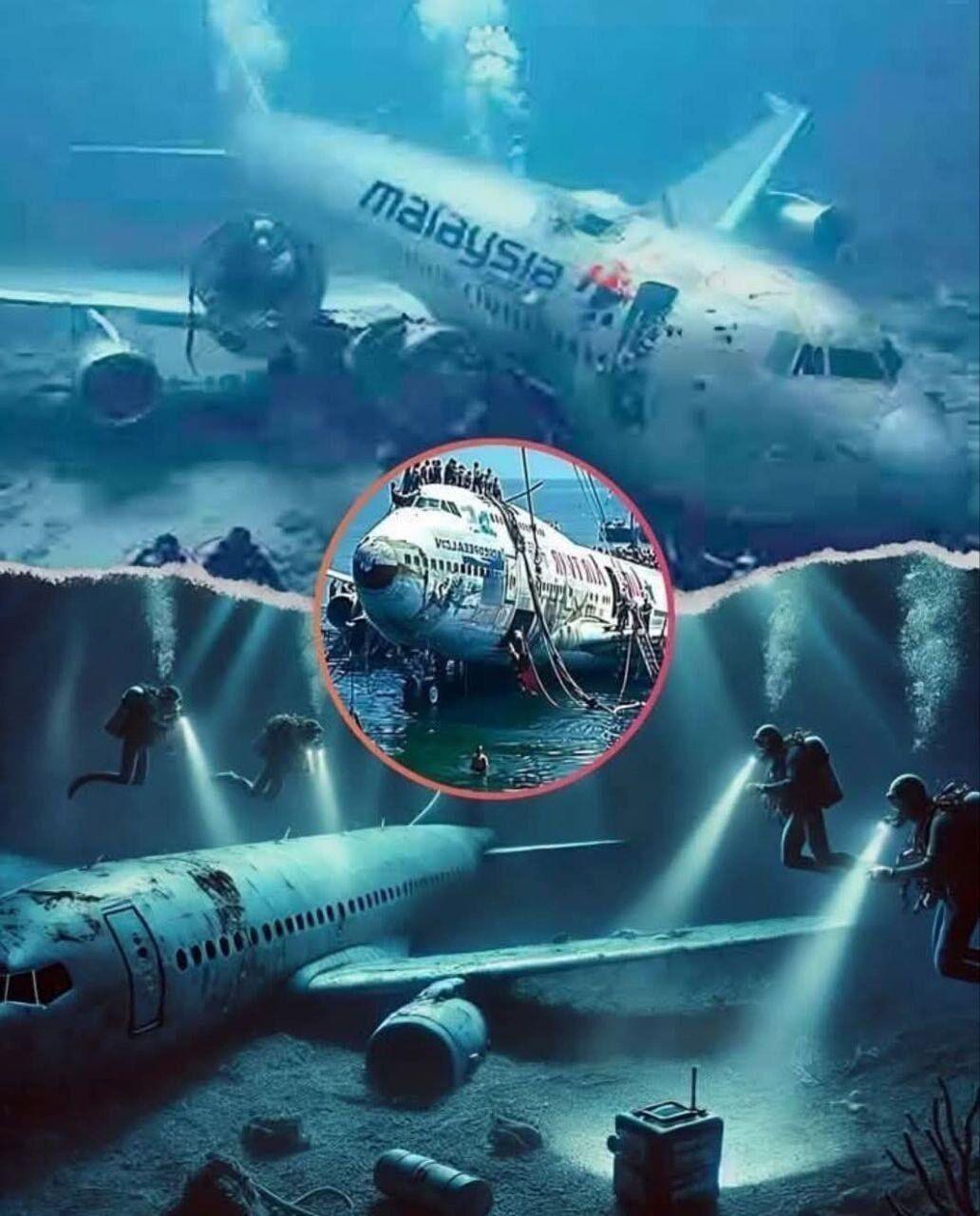
When recovery crews finally carved through the ice that had swallowed the aircraft whole, they stepped into a moment that had refused to end. The fuselage was frozen into a kind of eerie perfection, not wreckage but preservation. Inside, nothing showed the passage of four decades. Seats remained neatly upright. Meal trays were latched. Overhead bins cradled luggage as if the passengers might stand at any second and retrieve it. It didn’t feel like archaeology. It felt like interruption—like time had paused mid-breath and never resumed.
The news detonated across every network within hours. Headlines strained to capture the magnitude of what had surfaced: miracle, nightmare, conspiracy, divine sign, impossible event. Theories multiplied faster than any verified detail. Families of the missing arrived in waves, many carrying photographs that had softened and yellowed over the years. They pressed against barricades, faces hollow with hope and dread. Some stared at the plane as if it had betrayed them by returning. Others whispered names, daring the impossible. Every one of them searched for meaning in a discovery that offered none.
Inside the aircraft, the passengers appeared untouched by time. Some looked peaceful, the calm expression of someone who had simply drifted to sleep. Others wore something closer to fear—or at least that’s what their families claimed to see. Each person projected their own narrative onto the preserved faces, trying to reconcile the frozen tableau with the decades of grief that had followed. No interpretation matched another. But all the families shared the same brutal truth: after forty years, the mystery was still intact, and closure remained as out of reach as the day the plane vanished.
Experts swarmed the site, each discipline convinced it could finally solve the riddle. Aviation engineers charted every panel and rivet. Physicists searched for anomalies in temperature, radiation, magnetism—anything that could point to how an aircraft could disappear and reappear unchanged. Forensic teams combed through the interior. Weather specialists reconstructed the storm the plane had reportedly flown through. Confidence evaporated quickly. Nothing adhered to the normal logic of mechanical failure or environmental catastrophe. There was no debris field. No burn marks. No structural collapse. Fuel tanks remained completely full, a detail that contradicted every scenario of engine shut-down or power loss. And the black box—the one piece of equipment designed to survive anything—was gone. Not smashed. Not burnt. Gone without leaving so much as a bolt behind.
Radar logs only deepened the confusion. The flight path showed no erratic movement, no warning signs. The plane had simply vanished mid-route, as if someone had erased it from the air. The deeper investigators dug, the less sense any of it made. Every explanation dissolved under scrutiny. The aircraft felt less recovered than displaced, as though it had slipped out of the rules that govern physical space and time.
