
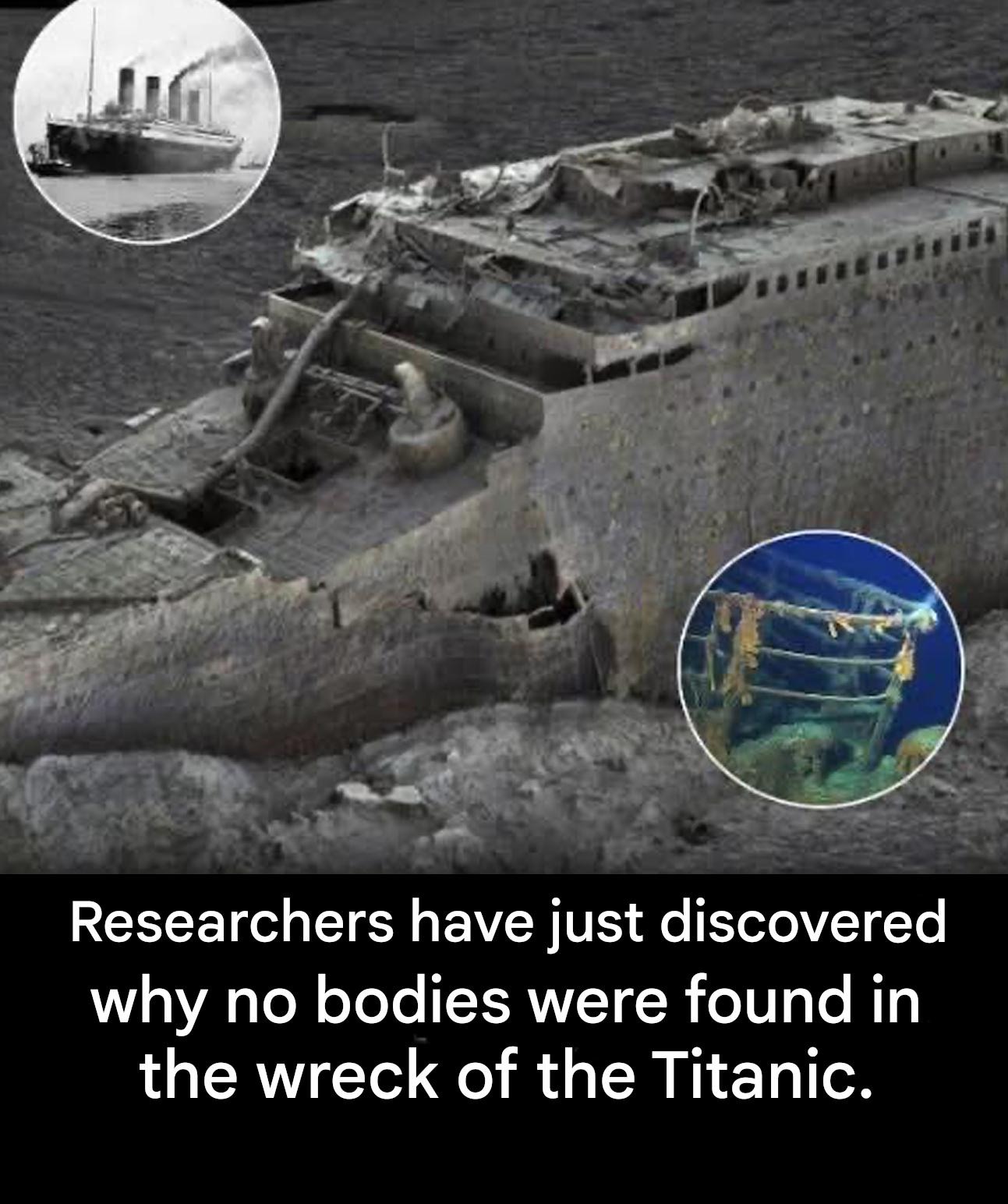
More than a century after the sinking of the famous ocean liner, one question keeps resurfacing: how is it that, despite numerous underwater explorations, no human remains have been found at the bottom of the ocean? The story of the Titanic continues to fascinate, and this “mystery” fuels the collective imagination. Yet, the explanations are far more natural than one might think—and you will see that they beautifully illuminate this little-known aspect of the adventure.
An impressive discovery… but different from what was expected
When the wreck was located in 1985, the explorers expected to see everything again: objects, structures, but also more direct evidence of the passengers’ presence. Instead, they found a veritable time capsule made of intact dishes, collapsed furniture, shoes, and suitcases resting in almost solemn silence. No human remains, however.
Even James Cameron, during his numerous dives to prepare for his film, confirmed that he never saw anything other than scattered clothing and accessories.
So why are these objects still there, but not the rest?
The scientific explanation: an extreme environment that transforms everything. The bottom of the North Atlantic is another world: dark, icy, and subjected to colossal pressure. Nothing like the calmer, shallower waters we often imagine.
In this environment, everything evolves differently. Experts explain that at depths of over 3,600 meters, biological activity is intense: tiny marine organisms rapidly transform organic matter, regardless of its type or origin. This natural process is part of the life cycle in the deep sea.
Even elements considered resistant, such as limestone structures, eventually dissolve little by little in these waters, which are poor in stabilizing minerals. This is why no lasting traces have survived, while objects like shoes—made of different materials—have endured for decades.
By comparison, in seas with low biological activity, some human remains can persist for a very long time. This is simply not the case in the North Atlantic.
