
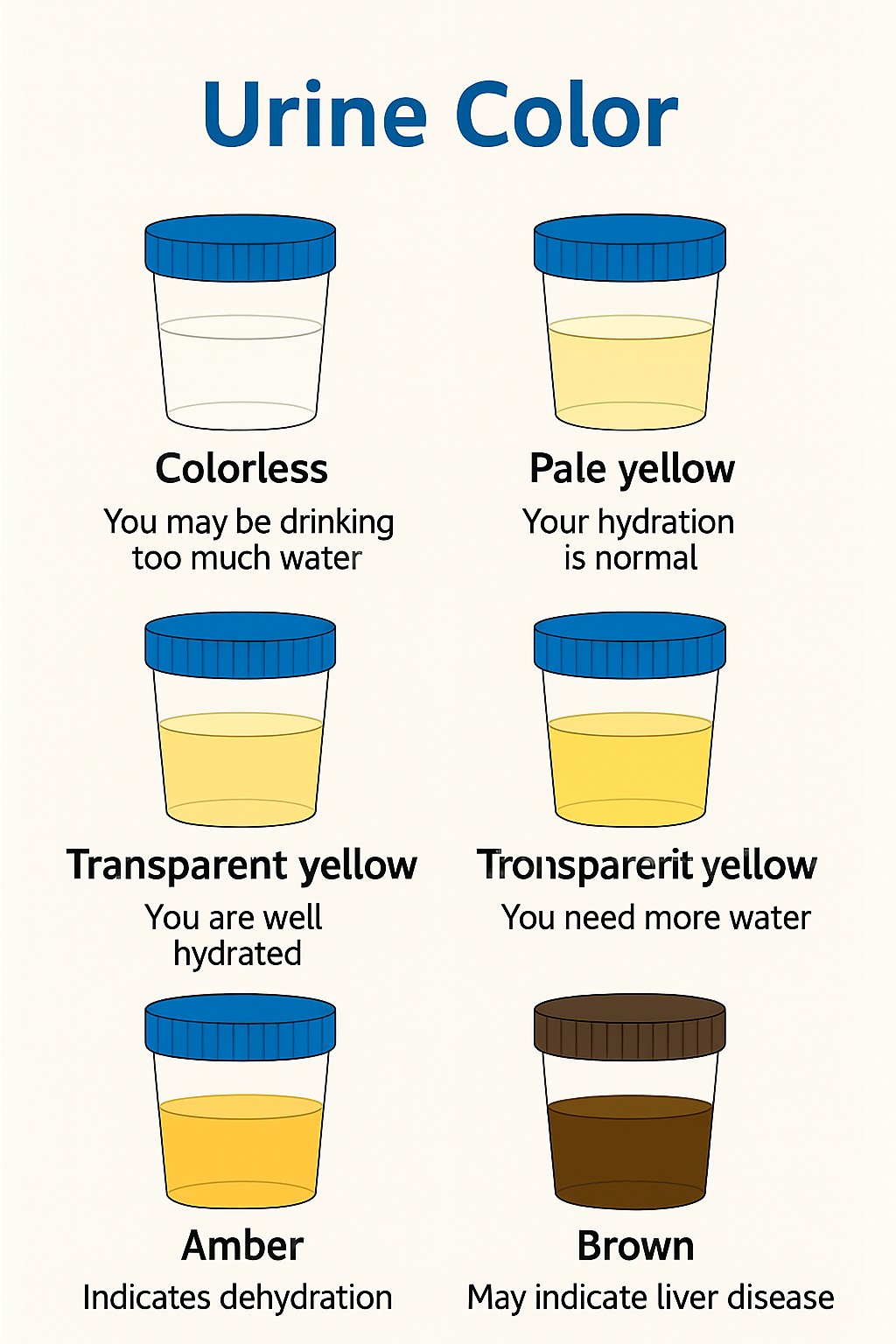
5.  Pink or Red
What it may mean:
Beets, berries, or colorful foods often cause this hue.
When to tune in:
If you haven’t eaten red foods and the color remains for more than a day or two, it’s worth reaching out to a healthcare provider—not for panic, simply for peace of mind.
6.  Orange
What it may mean:
This may be linked to supplements (like B vitamins), medications, or mild dehydration. In some cases, it can reflect changes in bile or liver flow.
Kind suggestion:
Drink a little more water and observe shifts over a day or two. If the shade persists, a simple doctor’s visit can offer clarity.
7.  Blue or Green
What it may mean:
Rare but possible—certain medications, food dyes, or uncommon conditions can cause this.
What to do:
If no colorful foods or drinks were involved, and the shade stays noticeable, seeking medical guidance is a good next step.
8.  Foamy or Bubbly Urine
What it may mean:
It can happen if you urinate quickly or forcefully. But if it happens often, it may suggest changes in protein balance.
Supportive action:
If bubbles appear frequently—or come with other signals like swelling—it’s worth checking in with a healthcare professional.
 Final Thoughts: Your Body’s Gentle Signals
Your pee isn’t trying to alarm you—it’s simply one of your body’s natural ways to keep you informed.  Paying attention to these small changes is a kind act of self-care and body awareness.
Small ways to stay in balance:
 Sip water throughout the day Enjoy mineral-rich, nourishing foods Listen to your body without judgment Seek support when something feels “off”—early care is always empowering
 Remember: wellness is about tuning in, not stressing out.
