
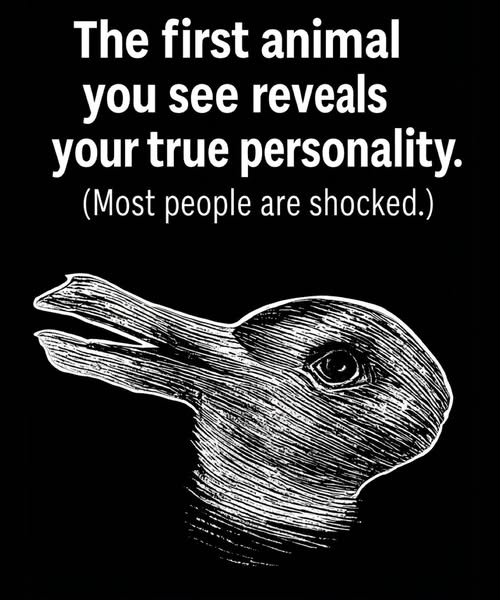
A classic example is an image that hides two different animals within the same drawing. Some people immediately see one, while others are convinced the second appears first. Neither view is right or wrong—the image is designed to support both. What makes it intriguing is how quickly the brain settles on one interpretation, often without conscious effort. That initial choice can hint at whether someone tends to focus on structure and detail or gravitates toward imagination and flexible thinking.
If one animal stood out to you first, it might suggest a naturally practical and organized approach to situations. People with this inclination often value clarity, logic, and step-by-step problem solving. Seeing the other animal first may point toward a more creative and intuitive outlook, with a preference for symbolism and exploring possibilities beyond the obvious. In reality, most people draw on both styles depending on context. In the end, optical illusions aren’t about putting people into boxes—they’re about appreciating the rich diversity of how humans perceive and make sense of the world.
Here are some popular interpretations people usually attach to this classic duck–rabbit illusion. They’re not scientific truths, but they’re fun, reflective, and often feel accurate—which is why the image works so well.
