
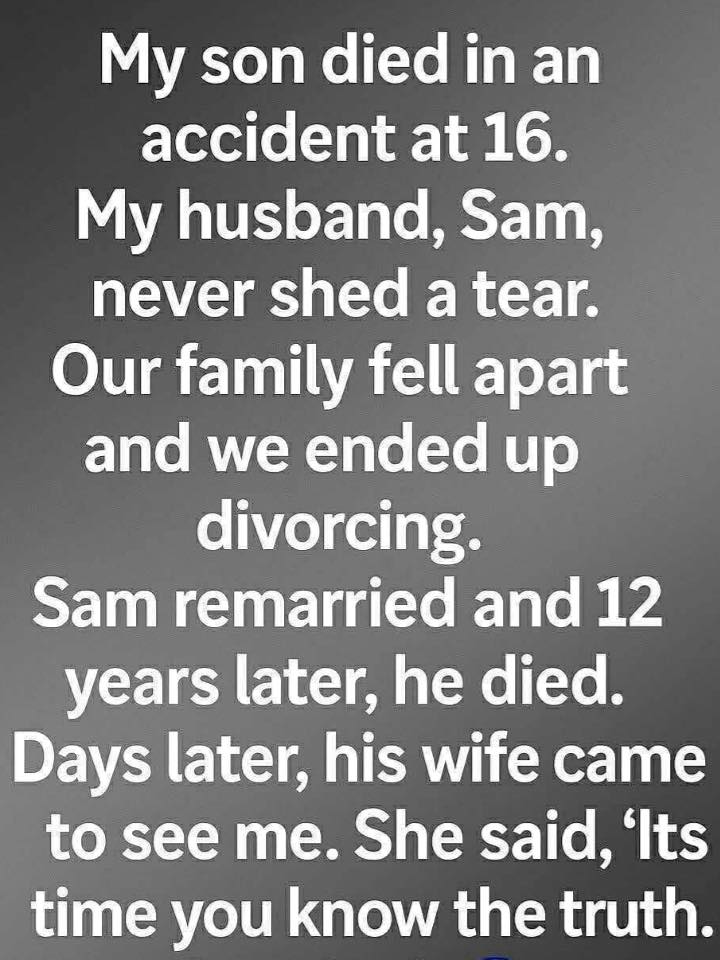
He never spoke about it.
And in that moment, I finally understood: the man I thought was made of stone had been drowning quietly all along—loving, mourning, and breaking in a language I never learned how to hear.
That night, he brought flowers. He sat by the water and talked to our son until sunrise. Then, he cried—gut-wrenching, full-body sobs—but never once in front of me.
“He didn’t want you to see him broken,” she said, her own tears falling now. “He thought staying strong was how he could carry you both.”
Later that evening, I went to the lake. I didn’t know what I was looking for—maybe just a way to feel close to them both again. What I found was a small wooden box, weathered but intact, tucked beneath a tree near the water’s edge.
Inside: letters. Dozens of them.
One for every birthday our son never got to celebrate.
All signed, Love, Dad.
I sat there until the sun slipped beneath the trees, reading his words, feeling every year of pain, love, guilt, and memory he had never spoken. For the first time, I saw my husband’s grief—not through tears, but through tenderness.
Conclusion:
Grief wears many masks. Sometimes, it screams. Sometimes, it isolates. And sometimes, it is quiet—aching behind dry eyes, folded into letters no one was ever meant to read.
I once believed love had to be visible to be real. But I’ve learned that some of the truest forms of love are silent. Hidden. Worn like armor, not to protect oneself, but to shield someone else.
Sam’s silence wasn’t absence—it was love, buried deep, carried heavily, and expressed the only way he knew how.
And in finally hearing that quiet love, I found something I’d lost along the way: peace.
