
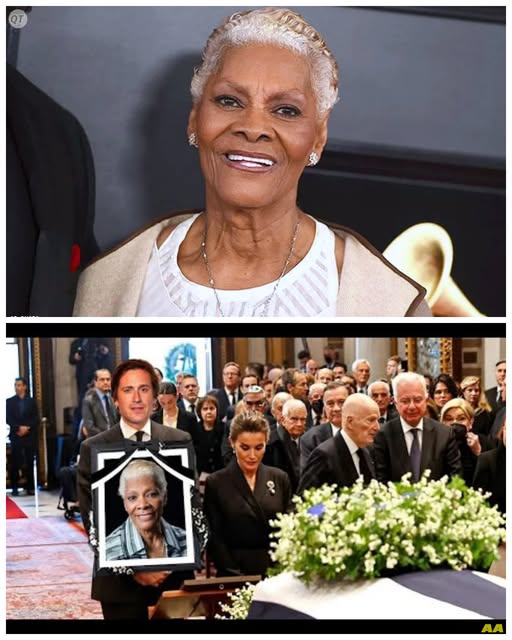
The announcement moved through the entertainment world like a cold wind across empty ground—quiet, chilling, impossible to ignore. News of Dionne Warwick’s passing, in this fictional retelling, arrived without warning and stunned everyone who had ever been shaped by her voice. Radio stations halted their playlists. Studios dimmed their lights. Concert halls fell silent. And for a moment, it felt as if music itself paused to grieve.
For decades, her songs had carried listeners through heartbreak and hope, joy and reflection. Her voice had soothed restless nights, lifted spirits, and woven itself into countless personal histories. Now the world stood in a hushed stillness, struggling to comprehend that such a steady, luminous presence could suddenly be gone.
Her funeral, in this imagined world, became more than a ceremony—it became a crossroads of grief, admiration, and unresolved tension. Friends, rivals, family, and strangers arrived carrying their own versions of the woman they loved, feared, admired, or misunderstood. Among them was Elijah, a longtime collaborator and friend, whose entire emotional landscape shifted the moment he stepped out of his car that afternoon.
The venue chosen wasn’t the grandest, but it was the most meaningful. It was where Dionne had once stood as a young performer, where her voice first filled a room and hinted at what was to come. Now the hall welcomed mourners under an amber-filtered sky, the last light of day casting a warm, aching glow across the entrance.
